“Art” was traditionally used to encode information. A modern day Westerner transported back in time to a Polynesian ship might mistakenly think that the men are really jolly sorts because they are always singing. In fact, their “singing” is really pattern-encoded navigation data.
Long before western science ever figured it out, the Anasazi developed a spiral calendar that described the wobble in the Earth’s axis of 18.6 years, which is important for understanding flood-drought cycles. Having majored in physics, I can say unequivocally that the Anasazi system is far simpler. The Anasazi system could be learnt by almost anyone, but the Newtonian description of the same thing can only be understood by a tiny number of people.
Another example of art as information is the “song map” of the Pitjantjatjara women. Today the “Aboriginal art” that is produced mostly does not encode much meaningful information, if any. The traditional pictures, however, encoded geographical information. The pictures had accompanying songs that others could use to navigate with even if unfamiliar with the terrain. (Songs have a tempo that remains highly accurate over time. This can be used to time out travel distances, and the songs themselves can encode information about the surrounding environment.)

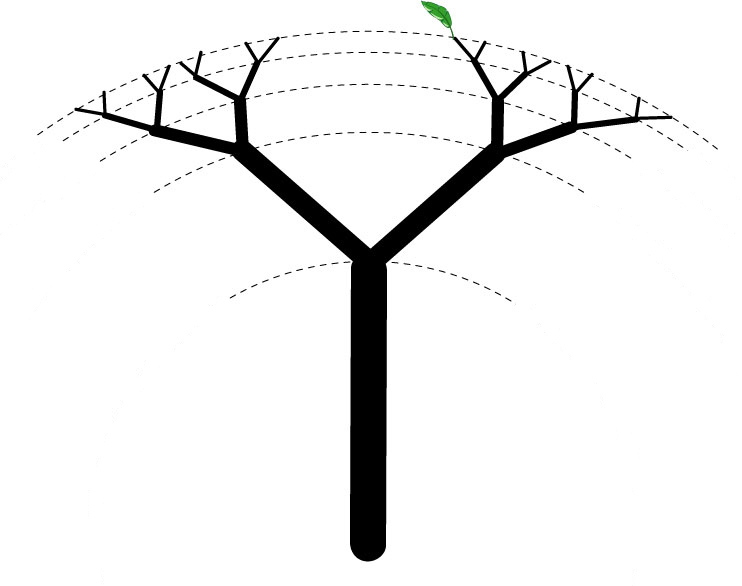
We can group together many physical patterns under one unified pattern referred to in permaculture as the “general model.” This model resembles a tree and can differentiate into waves, streamlines, spirals, cloud forms, toroids, branches, scatters and nets. When a two-dimensional representation of the model is tessellated, or put together to make a grid, it can reveal many other patterns.

Tesselation:
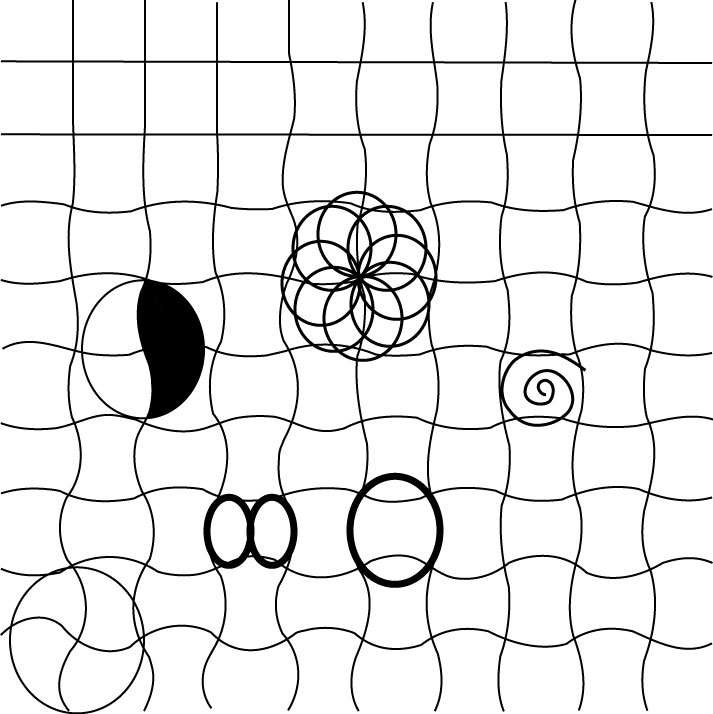
Also revealed in the general model is the Overbeck jet – a pattern that is ubiquitous in nature.

Overbeck jet evident in an embryo and placenta:

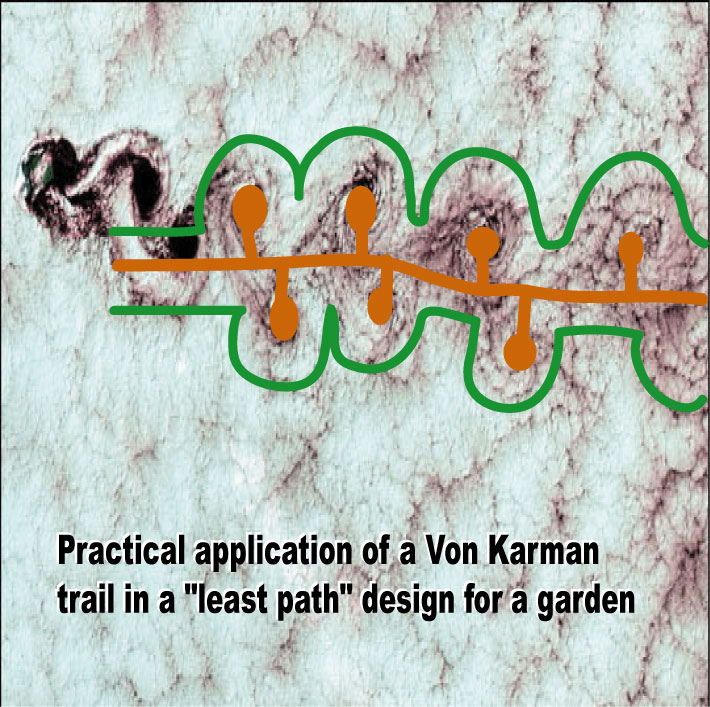
If a flow is interrupted by an object in it’s path, alternating Overbeck jets appear creating a Von Karman trail. As a flag flaps in the wind, it is mapping out the Von Karman trail created by the flagpole.
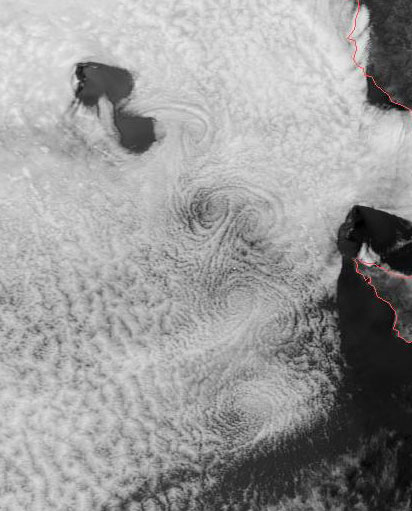

Similar to Von Karman trails are Ekman spirals, which have a significant effect on weather. They occur when wind encounters an obstacle such as trees along an edge. The wind is thrust up but cannot oscillate to create Von Karman trails. Instead, spiralling waves are created. The upward flow of air can reach 20 to 40 times the height of the trees compressing the air. This can create rain bands under the right conditions.

Patterns in flow over time are regulated by “pulsers.” Pulsers control growth – prescribing when a function is to begin and end. The Belousov-Zhabotinsky reaction, which creates a non-linear chemical oscillator, is an example. In it, the Overbeck jet often occurs.
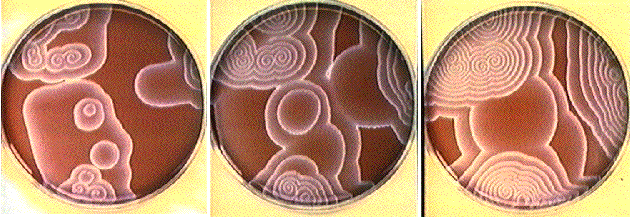
Pulses in the human body control heart beat, peristalsis, circadian rhythms, menstruation, etc. Pulses out of balance are evident in fibrillation, seizure, etc.
In a system, elements have their own order. Order defines relative size and placement of elements in a system. Our bodies’ organs demonstrate order. Consider the lungs. They start with trachea which branch into the primary bronchi to the secondary then tertiary bronchi to bronchioles to terminal bronchiole to respiratory bronchiole to alveolus. It is the same with the spleen, liver, kidneys, etc. Everything has its place in the order, and the system will function poorly with elements out of their order. Catchment dams are beneficial to the environment; large valley dams are destructive. In systems containing different orders, certain species will fit in a certain order; others will not. Rainbow Darters (Etheostoma caeruleum) do just fine in a fast stream – not so well in a pond. Landscape comes in orders. Headwaters have rough, rocky soils with shrubs and hardy vegetation. Estuaries have deep sand and sediment and have a richer variety of life.
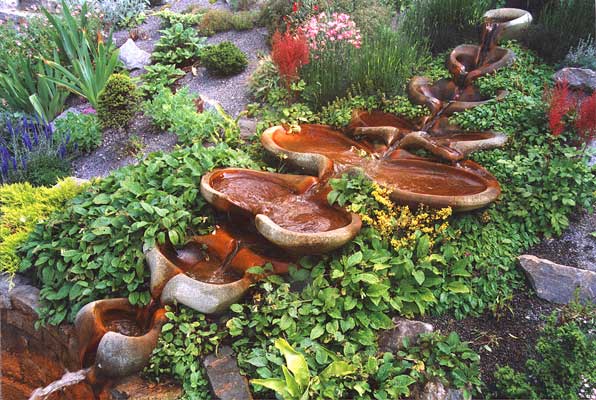
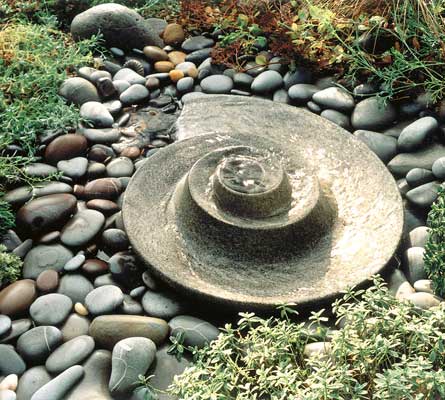
Knowing flow effects like Von Karman trails, Ekman spirals and Overbeck jets not only inspire design ideas, they offer us a way to manipulate flow with minimal effort.
The following flowforms are used to oxygenate water: