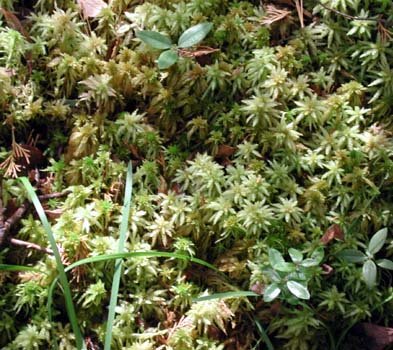
Arielle, thanks for this great piece of research. I'm sure the permaculture community will put the information to good use.Sphagnum moss could be used as a cheap, reusable filter for poor families with metal-contaminated water. I used a Scanning Electron Microscope and Energy Dispersion X-Ray spectrometer, to learn where Sphagnum stores the metals it absorbs. Is it possible to remove metals from Sphagnum cristatum after absorption? I tested this by placing Sphagnum in an acid solution after allowing it to absorb copper. To find out if Sphagnum could remove trace amounts of dissolved arsenic I prepared moss-filtered and control solutions for analysis in an Inductively Coupled Plasma-Mass Spectrometer. Finally, I applied it as a filter for contaminated water, using metal-rich water from my family’s well. I found that copper bound itself all over the surfaces of moss cells, and was easy to remove by soaking in a low pH solution. Sphagnum could be reused as a filter if it was dried between uses, and would remain effective. Sphagnum wasn’t very effective at removing arsenic, but it did remove other metals at low concentrations. Sphagnum is very cheap and transportable, and by showing that Sphagnum is reusable, it makes it even more cost effective; a single filter could last for years. For many places in the world, where people can’t afford the water filters they need, Sphagnum could save lives. Also, Sphagnum reusablility means people wouldn’t need to continually harvestit and harm the environment to obtain filters.
Friday, May 05, 2006
Cheap, natural solution to heavy metals in water
Arielle Garrett of Stellys Secondary School, Saanichton, British Columbia has discovered a cheap, natural way to remove heavy metals from water. The following is a summary of her findings:


Thursday, May 04, 2006
Why bother? Nothing's wrong.
Why bother? There’s nothing wrong with the environment, right? The late Julian Simon has suggested that we have "the technology to feed, clothe, and supply energy to an ever-growing population for the next 7 billion years." No. Wrong. At the 2000 growth rate of 1.4 percent, that would be 6 billion x 1.0147,000,000,000 . I have yet to come across a calculator capable of calculating this, but it would mean that the mass of the population of the human race would far exceed the mass of the universe, which is estimated at 3 x 1055 g. At the 2000 growth rate, the number of people would exceed the number of atoms in the universe after 11,500 years. This is an example of R.A.S. (Rigorously Applied Stupidity). We shouldn’t be too hard on Dr. Simon. He worked for the Cato Institute, so it was his job to say silly things. In fact, there are a number of serious threats to the environment, several of which have a very real potential to be a significant threat to the human race. The following list, while not totally exhaustive, does contain what I believe to the greatest threats to the human race.
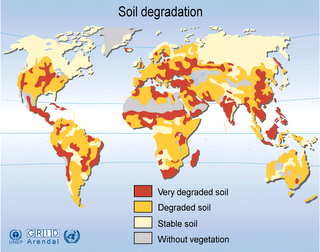
Something totally off the radar of the media, mainstream or otherwise, is the threat of erosion and salinisation. While erosion is more of a concern in tropical and arid regions, and salinisation on prairies and in arid regions, people in temperate areas are not immune to its effects. Erosion in some regions it is so great that a tonne of produce comes at a cost of 20 tonnes of topsoil.2 In Canada, 38% of farmland in the prairies has areas significantly affected by salinisation.3 This is a relationship that cannot continue. The food we eat needs healthy topsoil to grow. Animals and animal products we rely on graze on land. The plants the animals graze on need topsoil. We cannot rely forever on artificial fertilisers, which compound the problem as well as introduce many more.
Deforestation is a problem that is often missed and its implications are almost always missed. The easiest way to create a desert is to cut down trees. Condensation drip from trees can account for as much as 80 to 86% of precipitation on upland slopes of coastlines. That’s precipitation that never registers on any rain gauges. Moving a few hundred kilometres in from the coast, 100% of the precipitation may be coming from trees. How do we know this? Most of the evaporation off of the ocean is H2O16. At the coast, 40% of the water in rain is H2O16. Trees, however, transpire H2O18. A few hundred km in from the coast, the rain is 100% H2O18. Cut the trees and you risk making a desert.
Additionally, there is the very general problem of pollution. According to the Environmental Law Centre at the University of Victoria “Public health experts estimate that air pollution is responsible for 16,000 premature deaths in this country each year; at this rate, forty Canadians die from air pollution-related causes each and every day.” And according to the World Health Organization, there are no safe levels for human exposure to ground-level ozone.4 Small particulate matter has been liked to many illnesses including ischemic stroke and other cardiovascular diseases5 and lung cancer.6 Auto exhaust has been linked to childhood cancers.7 This is to say nothing of dioxins and furans.
Acid rain is still with us and there are no places on the Earth left that are immune to rain acidic enough to kill trees. There are an estimated 142,000 lakes in Canada that have been damaged by acid rain.8
The vital Antarctic krill population has plummeted by 80% since the 1970s.9 Krill are not only a source of food for much of the Arctic and Antarctic life, they are also an important carbon sink.10 One result of carbon emissions is that the ocean is acidifying and much of the ocean life cannot tolerate this rapid change in pH, particularly life that incorporates calcium carbonate to make shells. We are well on our way towards making the oceans more acidic than they have been in 65 million years.11
Levels of carbon dioxide have spiked since 2002 above the alarming rates of increase in the late 1990s.12 Also disturbing have been predictions of an ice-free arctic ocean within the next 100 years13; melting of Greenland at rates 2 to 3 times the rate in 1996 that could see sea level rise by 7m14, the melting of Antarctica which could see ocean levels rise much more than that; and the news that peat bogs in Siberia are thawing and have the potential to release billions of tonnes of methane.15 (Methane is 20 times more powerful a greenhouse gas than carbon dioxide.)
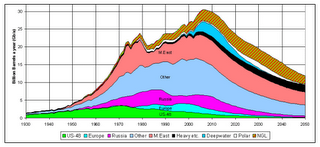
Modern industrial agriculture depends on petroleum. Without cheap energy, farmers aren’t able to grow – a problem currently seen in the United States.16 The future of fossil fuels looks rather grim. It seems as though we are very close to a peak in the global production of oil. Discovery of oil reserves has already peaked with the last huge discoveries made in the 1960s.
We won’t be switching to natural gas. It has already peaked in North America and overseas transport is a risky proposition not only for the chance of accident but from the standard 2% or so that regularly leaks out. The global climate has enough methane in it as it is. Coal won’t do it. The U.S. coal reserves are estimated to last about 40 years if consumption rates are increased to just 8%.17 Nuclear won’t do it. At current rates of usage, there are 50 years left of cheap uranium reserves left in the world.18 Increase the rates of nuclear power generation and the depletion rate increases. Furthermore, uranium is mined using oil-powered machinery.
This is most important because, as Dr. Albert Bartlett says, “Modern agriculture is the use of land to convert petroleum into food.” The United States uses 10.25 quadrillion Btu of total energy in the food industry, 2.20 quadrillion Btu of which go into agricultural production.19 This is a practice that cannot and will not continue. It is the textbook meaning of unsustainable.
Also of concern is the rush to distribute as many genetically modified organisms into the environment as possible. Perhaps the most alarming of these has been pseudomonas syringae. It’s thought that pseudomonas syringae could play a role in up to 80% of the world’s rain formation. The genetically modified version is incapable of serving as a condensation point for rain droplets and is currently used to spray fruit crops to protect them from frost. So, we get to protect monoculture farmers and threaten life on the planet at the same time.
Ultimately, the bad news is that homo sapiens have reached a point where they are the single most influential species on the planet and that influence exerted is mostly negative. Don’t panic. This need not be the case. We have the practical knowledge to exert our influence an environment-enhancing way. Instead of wiping out species, we could be contributing to speciation. Instead of creating deserts, we could be reversing them and creating forests in their place. If you kick nature, nature kicks back harder. If you benefit nature with good design, you almost always get back more benefit than you designed for.
Something totally off the radar of the media, mainstream or otherwise, is the threat of erosion and salinisation. While erosion is more of a concern in tropical and arid regions, and salinisation on prairies and in arid regions, people in temperate areas are not immune to its effects. Erosion in some regions it is so great that a tonne of produce comes at a cost of 20 tonnes of topsoil.2 In Canada, 38% of farmland in the prairies has areas significantly affected by salinisation.3 This is a relationship that cannot continue. The food we eat needs healthy topsoil to grow. Animals and animal products we rely on graze on land. The plants the animals graze on need topsoil. We cannot rely forever on artificial fertilisers, which compound the problem as well as introduce many more.

Deforestation is a problem that is often missed and its implications are almost always missed. The easiest way to create a desert is to cut down trees. Condensation drip from trees can account for as much as 80 to 86% of precipitation on upland slopes of coastlines. That’s precipitation that never registers on any rain gauges. Moving a few hundred kilometres in from the coast, 100% of the precipitation may be coming from trees. How do we know this? Most of the evaporation off of the ocean is H2O16. At the coast, 40% of the water in rain is H2O16. Trees, however, transpire H2O18. A few hundred km in from the coast, the rain is 100% H2O18. Cut the trees and you risk making a desert.
Additionally, there is the very general problem of pollution. According to the Environmental Law Centre at the University of Victoria “Public health experts estimate that air pollution is responsible for 16,000 premature deaths in this country each year; at this rate, forty Canadians die from air pollution-related causes each and every day.” And according to the World Health Organization, there are no safe levels for human exposure to ground-level ozone.4 Small particulate matter has been liked to many illnesses including ischemic stroke and other cardiovascular diseases5 and lung cancer.6 Auto exhaust has been linked to childhood cancers.7 This is to say nothing of dioxins and furans.
Acid rain is still with us and there are no places on the Earth left that are immune to rain acidic enough to kill trees. There are an estimated 142,000 lakes in Canada that have been damaged by acid rain.8
The vital Antarctic krill population has plummeted by 80% since the 1970s.9 Krill are not only a source of food for much of the Arctic and Antarctic life, they are also an important carbon sink.10 One result of carbon emissions is that the ocean is acidifying and much of the ocean life cannot tolerate this rapid change in pH, particularly life that incorporates calcium carbonate to make shells. We are well on our way towards making the oceans more acidic than they have been in 65 million years.11
Levels of carbon dioxide have spiked since 2002 above the alarming rates of increase in the late 1990s.12 Also disturbing have been predictions of an ice-free arctic ocean within the next 100 years13; melting of Greenland at rates 2 to 3 times the rate in 1996 that could see sea level rise by 7m14, the melting of Antarctica which could see ocean levels rise much more than that; and the news that peat bogs in Siberia are thawing and have the potential to release billions of tonnes of methane.15 (Methane is 20 times more powerful a greenhouse gas than carbon dioxide.)
Modern industrial agriculture depends on petroleum. Without cheap energy, farmers aren’t able to grow – a problem currently seen in the United States.16 The future of fossil fuels looks rather grim. It seems as though we are very close to a peak in the global production of oil. Discovery of oil reserves has already peaked with the last huge discoveries made in the 1960s.

We won’t be switching to natural gas. It has already peaked in North America and overseas transport is a risky proposition not only for the chance of accident but from the standard 2% or so that regularly leaks out. The global climate has enough methane in it as it is. Coal won’t do it. The U.S. coal reserves are estimated to last about 40 years if consumption rates are increased to just 8%.17 Nuclear won’t do it. At current rates of usage, there are 50 years left of cheap uranium reserves left in the world.18 Increase the rates of nuclear power generation and the depletion rate increases. Furthermore, uranium is mined using oil-powered machinery.
This is most important because, as Dr. Albert Bartlett says, “Modern agriculture is the use of land to convert petroleum into food.” The United States uses 10.25 quadrillion Btu of total energy in the food industry, 2.20 quadrillion Btu of which go into agricultural production.19 This is a practice that cannot and will not continue. It is the textbook meaning of unsustainable.
Also of concern is the rush to distribute as many genetically modified organisms into the environment as possible. Perhaps the most alarming of these has been pseudomonas syringae. It’s thought that pseudomonas syringae could play a role in up to 80% of the world’s rain formation. The genetically modified version is incapable of serving as a condensation point for rain droplets and is currently used to spray fruit crops to protect them from frost. So, we get to protect monoculture farmers and threaten life on the planet at the same time.
Ultimately, the bad news is that homo sapiens have reached a point where they are the single most influential species on the planet and that influence exerted is mostly negative. Don’t panic. This need not be the case. We have the practical knowledge to exert our influence an environment-enhancing way. Instead of wiping out species, we could be contributing to speciation. Instead of creating deserts, we could be reversing them and creating forests in their place. If you kick nature, nature kicks back harder. If you benefit nature with good design, you almost always get back more benefit than you designed for.
References
1. http://www.greatchange.org/ov-catton,denial.html
2. http://www.botany.uwc.ac.za/Envfacts/facts/erosion.htm
3. http://res2.agr.ca/publications/hs/chap08_e.htm
4. http://www.cleanair.ca/science_facts.html
5. http://www.eurekalert.org/pub_releases/2005-10/bidm-sel102805.php
6. http://www.eurekalert.org/pub_releases/2002-03/nyum-mds022702.php
7. http://www.eurekalert.org/pub_releases/2005-08/bsj-ccs080905.php
8. http://www.cleanair.ca/science_facts.html
9. http://www.eurekalert.org/pub_releases/2004-11/bas-fst110104.php
10. http://www.eurekalert.org/pub_releases/2006-02/bas-akp020606.php
11. http://www.eurekalert.org/pub_releases/2006-02/ci-oms021706.php
12. http://www.commondreams.org/headlines06/0115-04.htm
13. http://www.eurekalert.org/pub_releases/2005-08/uoa-aoc082205.php
14. http://news.bbc.co.uk/1/hi/sci/tech/4720536.stm
15. http://www.commondreams.org/headlines05/0811-03.htm
16. http://www.txfb.org/TexasAgriculture/2005/102105/102105opinions.htm
17. http://www.globalpublicmedia.com/transcripts/645
18. http://www.world-nuclear.org/info/inf75.htm Nuclear power also leaves a toxic legacy for millenia.
19. http://www.earth-policy.org/Updates/2005/Update48_data.htm
Tuesday, May 02, 2006
Thomas Street Open Garden Sunday, May 7th
If you are in or near Melbourne, Australia on Sunday, May 7th, check out the Thomas Street open house.

Where: 16 Thomas Street, Clayton, Southeast Melbourne
When: Sunday May 7, 12 noon – 5pm
Entry: with (optional) donation.
Phone: 03 9029 2550
Email: broken
Web: broken
There will be:
- Garden tours
- Food stalls (including special treats from South America)
- An auction of wonderful wares and odd items
- Live music and poetry (if it's trumpet-playing, you are in for a treat)
- Displays
- Documentary screenings
- Talk on “The Living Soil: Making the Invisible Visible”
- Plants, seeds, and garden goodies for sale (donations of goods welcome)
- PermaSalsa – where permaculture gardening meets salsa dancing!

Monday, May 01, 2006
Cancerous growth
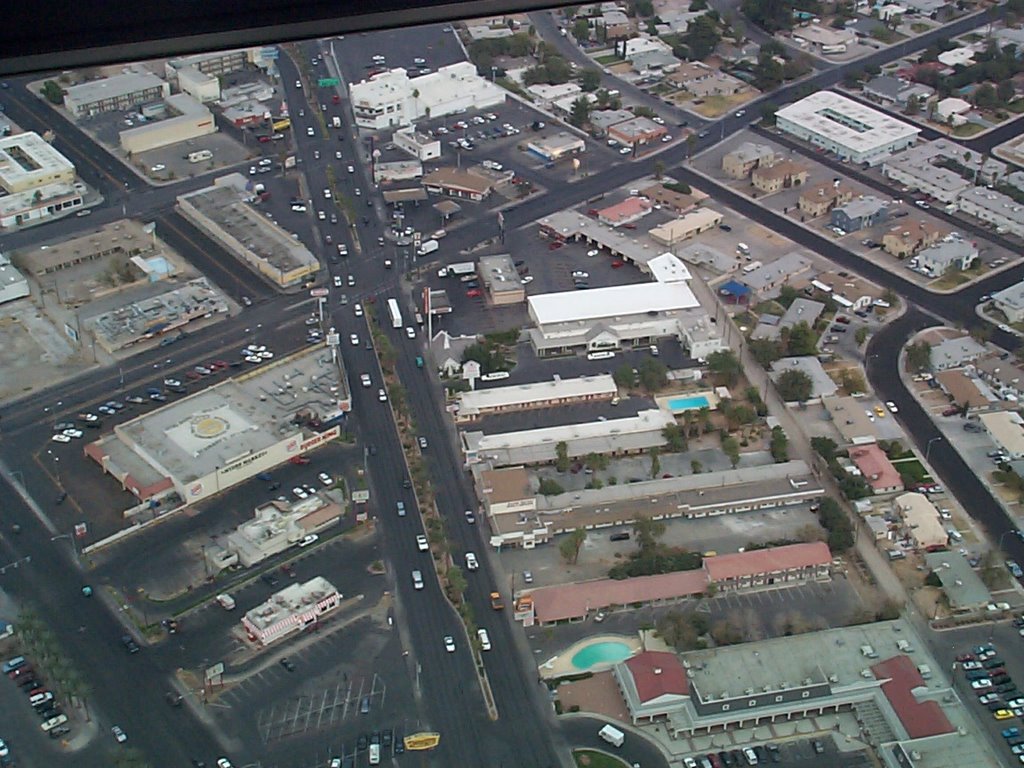 "The ultimate end to a growth economy is the same as an analogous growth: cancer. But for national economies, the victims are nature, soils, forests, people, water, and quality of life.
"There is one, and only one, solution, and we have almost no time to try it. We must turn all our resources to repairing the natural world, and train all our young people to help. They want to; we need to give them this last chance to create forests, soils, clean waters, clean energies, secure communities, stable regions, and to know how to do it from hands-on experience
- Bill Mollison
Friday, April 28, 2006
Save Thomas Street
The Thomas Street home of the Permaculture Solutions team is under attack.
Send them your ideas on how to defend the corner of paradise they've created.
Send them your ideas on how to defend the corner of paradise they've created.
Subscribe to:
Posts (Atom)